My Blog List

Sep 18, 2020

The Chowder That Left Me Hungry, And Not For More (Ghost Story book review)


Ghost Story by Peter Straub

Let it be known that if I was writing an academic essay on Ghost Story by Peter Straub, I would have a very differing opinion of this book. During undergrad when I was in honors for literature, a thesis on this book would be easy. The structure of the novel is very intentional. From the current descriptions of the Chowder Society’s minds, to the morbid stories they tell during meetings, to the background about Donald Wanderley and his lover, every bit of this book is a puzzle piece of individual ghost stories. While at the beginning they may appear a bit disjointed, slowly but surely they all connect. 

The Chowder Society tell tales of young boys killed, talk of their nightmares of each other’s ghosts, hear voices before they die. The reader gets tales of how a member, Edward Wanderley, was scared to death a year prior, and we get the backstory of his nephew who was engaged to someone who not only talked to a ghost, but seemed to have never existed at all herself based on the ‘truths’ she told. The structure of the chapters puts the reader in a sense of unease, unsure what is true or not, but always telling a version of a ghost story no matter the character’s point-of-view.

From a non-academic standpoint, I hated the structure. I’m glad that these posts are more like opinion articles from a newspaper rather than literary essays because this book did not work for me. I called it disjointed before and I stand by that, both in structure and characters.

There were too many characters. We have multiple members of The Chowder Society, all their wives,  kids, other townspeople, and more. Then we learn that some of the long list of characters we’ve heard of and tried to keep track of are now all the same person. Eva Galli is also Alma Mobley, Ann-Veronica-Moore, Anna Mostyn, and Amy Monkton. Greggory Bate is also Greg Benton and Greggorio. Fenny Bate is the small boy beckoning everyone to come outside and play. So after taking extensive notes to keep track of everyone, it’s all for naught. 

Up until the middle of the book, I assumed everything happening was created by the minds of The Chowder Society from untreated trauma, but near the middle-end of the book, confirmation is given on supernatural entities being behind it all. We get a ghost in Fenny Bate, and another in Lewis’s dead wife. We get a werewolf in Greg Benton. We get multiple women with the initials A.M.. Then we learn that Eva Galli is a shapeshifter. Let’s not forget the slaughtered sheep who died to a  vampire (which before the scarf discovery, I assumed was a Chupacabra). So are the characters shapeshifters, vampires, werewolves, or something else? The answer is left unclear, Straub explaining it off as some greater being that can speak in and mess with the minds of humans. Great for a monster book, not as great for a ghost story. The book left much to be desired. 

Overall: Too consistently confusing for 567 pages. 


Also, here is a link to someone else’s review that I enjoyed.


Sep 4, 2020

Now That's One Hell of a House (Hell House book review)

 Hell House by Richard Matheson


Hell House by Richard Matheson

Now this book is what I wanted out of a haunted house story. The house itself seems to have its own personality, Belasco being the one controlling all of it, like a puppet master in the wings.

Hell House did a wonderful job in keeping the reader unsure whether to trust Florence or Lionel, mediums or scientists. Back and forth we went, seeing the evidence validated from both sides until the very last scene. I’ll admit, I did think the book was over after Lionel’s machine finished, but then Benjamin said exactly what I was thinking, that ending like that was too easy. Chapter to chapter, I never knew exactly what was the truth or not about the ghosts, Belasco, Daniel, Florence’s power, or anything else in the house. I love that.

The prompt for this week talked about masculine takes on haunted house books, specifically using the term ‘testosterone-driven’. This book was not that to me. Perhaps Belasco himself was sex-crazed and lusty over the women in the book, even possessing them into doing sexual acts, but the other men were uninterested. Sex, not testosterone specifically. That being said, the lines where they women were possessed and saying vulgar sexual things to one another really turned me away from this book. I am asexual, like Alexis, but I find myself often sex-repulsed by such blatantly lewd things. The bruises around her nipples and even they gay wandering eyes didn’t bother me, but the vulgar speech was what got to me despite being integral to the haunting.

That being said, Matheson does have a style. It reminds me of Clive Barker. We previously read Rawhead Rex for the Monsters course, and the same kind of imagery was found in that story. I titled that blog post ‘Raw-Head Sex, Urine, Menstrual Blood, and Other Forgettable Fluids’. Matheson seems to have a clear focus on body mutilation and sex when it comes to Hell House. That subgenre is not my cup of tea (and I love most tea). But whereas a short story such as Rawhead Rex didn’t hook me in, Hell House caught my attention and held it, so I was able to get past the vulgarity to get to the next plot point. A few times I did chuckle from how absurd it was. The vulgarity was the only thing I didn’t like about this book. Everything else was lovely.

The ending for this book was both a hit and miss for me. Finding out Belasco was a self-hating, self-mutilating man with leg extensions was disappointing. Degrading him into submission was also very unsatisfying. But learning that his dead body was hidden behind the chapel in a lead room, and he had dehydrated himself to death with a pitcher of water a few feet away? Now that is what I was looking for.

But Hell House really hit all the notes I wanted that The Haunting of Hill House didn’t. We get more of the paranormal. We still get parallels between science and the supernatural. We get inside the heads of the characters analyzing phenomena around them without being dragged down by lengthy internal monologues.

Overall: I enjoyed reading this book, but probably wouldn’t watch a movie adaptation of it.

Aug 28, 2020

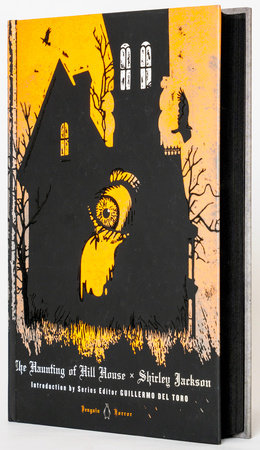
The Haunting Mind of Eleanor Vance (The Haunting of Hill House book review)

 The Haunting of Hill House by Shirley Jackson: 9780143122357 |  PenguinRandomHouse.com: Books

The Haunting of Hill House by Shirley Jackson

In this week’s group discussion, we were asked which is more effective for ghost stories: fast-paced or slow burn. The Haunting of Hill House by Shirley Jackson is definitely the latter. Since I grew up in an era of ‘can’t catch my breath’ thrilling ghost stories, I could immediately tell that this book was older, from 1959 upon further research.

The beginning of this book had me hooked. We got the gold dining set debacle with the old sisters who owned the house, and the theories about subterranean waters instead of ghosts. My favorite funny moment was doctor joking about how he wouldn’t have hanged himself from the library tower like one person did and would instead have liked it to be from the deer head in the game room.

This book kept sending my mind to the movie Clue (1985). The feeling of the old house and the people interacting drew me there, especially after the ominous story of the two daughters of Hugh Crain. The details about the house being just slightly off in angles was great.

But the characters ruined this book for me.

The story centered around the mindset of Eleanor Vance, a woman mentally unstable after taking care of her disabled and demanding mother for years. So we have an unreliable narrator who could either be especially sensitive to the supernatural or could be seeing and hearing things the other characters couldn’t because of a psychotic break.

And oh, Eleanor could whine! The first few sections of the book had me hooked, even through the slow burn of getting to the writing of the blood on the walls the first time and the dog. But then we have Nell’s repeated ‘journeys end in lovers meeting’ that drove me crazy. Plus her wishy-washy relationship with being almost cousins with Theodora, then hating her, then heartfelt wanting to move in with Theo, etc. Theodora was no saint herself as a character, a clear caricature of a whiny and spoiled rich kid. Luke was the classic troublemaker that begrudgingly helped. The Mr. and Mrs. Dudley are the stereotypical Scooby-Doo rude caretakers of the estate. A slow burn isn’t a bad way to tell a ghost story, but these characters were not helping the situation.

There were very few decent characters. Dr. Montague was a good leader of the group, and I found when his wife came in she was ridiculously over the top, adding yet another humorous element to the story. Arthur, the toxically masculine teacher and guard, was entertaining on occasion but forgettable. But the book wasn’t told from their points-of-view.

Almost everything after the first bloody writing and dog seemed to drag for me, excluding Mrs. Montague’s outbursts. The plot was too much of Eleanor’s internal dialog and thoughts. If they had been about the ghosts, perhaps it would have been interesting, but instead they were all about how she was perceived by the other characters. I had hoped the ending would turn everything around, back to the enjoyment I had at the beginning. It did not.

Eleanor finally snaps. She runs around banging on doors daring people to open them in case she is a ghost. She runs up a decrepit staircase, putting herself and Luke (sent to get her) in danger. The others force her to leave the house because she shouldn’t be enjoying staying in such a cursed environment. Thus, she drives her car into a tree, and her last thought is why, as if the spirit of Hill House possessed her and made her do it. Of course, we don’t technically know she is dead, but the end chapter of the book is telling what all the other characters did after, but there is no mention of Eleanor, so it can be assumed she is gone. I wonder if her spirit stayed at Hill House to join Hugh Crain.

Overall: While I don’t mind a slow build up for ghost stories, this book fell flat for me. But perhaps the recent TV adaptation is better, though I’ve never seen it.

Aug 19, 2020

Class Book Overview: The Haunted (08/19/20)

 Reviews so far

Do Read:

**** Nightmare House (Douglas Clegg)

*** The Exorcist (William Peter Blatty)

*** The Amityville Horror (Jay Anson)

*** The Shining (Stephen King)

Don't Read:

** Grave's End (Elaine Mercado)

** Hell House (Richard Matheson)

** The Haunting of Hill House (Shirley Jackson)

** Ghost Story (Peter Straub)


Movie Reviews -->

Class Movies Overview: The Haunted (08/19/20)

 Reviews so far

Love Ghost" Stickers by nikury | Redbubble | Stickers, Ghost ...

Do Watch:

***** Ghostbusters (1984)

**** The Others (2001)

**** The Exorcism of Emily Rose (2005)

*** Poltergeist (1982)

** Ghostbusters (2016)

** Paranormal Activity (2007)


Don't Watch:


Book Reviews -->

Watching People Watching a Video of Themselves (Paranormal Activity 2007 movie review)

Paranormal Activity (2007)

 Paramount, Blumhouse Announce Seventh 'Paranormal Activity' Movie ...

Get ready for my version of a semi-scathing review…

My boyfriend says horror movies tend to get low ratings on IMDb, so the fact that most of the movies we are watching this term get in the 6-7 range out of 10 is impressive. Paranormal Activity (2007) is advertised as a horror/mystery movie, but I would put it more as a thriller. There is a lot of suspense and build up, but only in the very last night do I ever get scared, and that’s because it’s a jump scare. I normally get nightmares from horror movies, but I found myself not scared to sleep after watching this. It was tense, it was interesting, but it wasn’t scary. As a thriller it was great, or a mystery because of the clues given in doses along the way. But I actually looked up to see why everyone said it was such a groundbreaking horror movie. I found a very long and dull article from 2009 that said the following:

As Paranormal expands into even more theaters, it seems likely to hit at least $100 million. All of Hollywood is watching. “What they did was very clever,” says a rival marketing exec. “I keep hearing it’s the scariest movie ever. When something generates that kind of word of mouth, you can be creative. And they were. They turned it into a movement.” (ew.com)

So apparently a low-budget horror film became a box office hit. Good for them honestly. I thought the pacing of the story was well done, and the structure of the nights with the timer in the corner was very clever. Even the found footage style was fitting and interesting even though found footage films generally make me motion sick. The line about the monster feeding off negative energy and Micah saying, “We shouldn't let your mother come over anymore,” was hilarious. I laughed aloud and made my boyfriend pause the movie so I could have a moment.

But the characters were where this movie lost me. I know we are supposed to hate Micah. They purposely make him the macho man asshole, but a lot of his lines made me so angry. He’s emotionally manipulative, says Katie should have told him about the demon before they moved in together, found a loophole of ‘borrowing’ not ‘buying’ an Ouija board, and literally told her to “pop a pill” at one point. It was very reminiscent of some emotionally abusive people I’ve known in the past. Micah is classic toxic masculinity, thinking in terms of his girlfriend, his house, he will solve the problem. So if that’s what the writers were going for, bravo. It was a good plot device to have them fighting after explaining that the demon feeds off negative energy.

But where Micah made me angry, Katie made me exhausted. The classic pushover girlfriend. She lets him do what he wants, says she wants to call the demonologist the next day after the ghost guy and Micah has her put it off unless it gets worse. And it gets worse. So then she threatens calling the demonologist again rather than just calling whether Micah approves or not. She doesn’t leave the house to call though, so he can stop her from doing it. And it yet again gets worse. She didn’t call and instead let Micah put down powder after the Ouija board literally caught on fire and moved! She finally calls the demonologist on the third threat and it’s too late because he’s out of town. Both the characters are classic stupid horror stereotypes, the man who wants to fight something out of his control (and eggs on the monster even) and the useless girl who thinks logically but does nothing.

And so we circle back to the ending once more. The jump scares. I was happy that Micah was finally dead. I wasn’t surprised that Katie was finally fully possessed. And then lights out. End scene. This movie left me so disappointed. After the credits came on I said aloud, “Wait, that’s it?”

Overall: I objectively see why Paranormal Activity is a classic, famous, and beloved horror movie. But it just didn’t do it for me. I wanted more demon and less boyfriend. It was good, it just didn't live up to the hype. 3/5 stars


Apr 18, 2020

Spinning Fairy Tales Anew (Spinning Silver book review)

Spinning Silver by Naomi Novik

I wanted to speak to the references to Rumpelstiltskin in this book. Even the title itself, Spinning Silver, is a play on the original tale, but this time Novik chooses to have the characters spinning silver instead of straw.
I got into this book and my mind immediately thought of two old tales to compare to our assigned book. The first was the ancient Greek tale of Midas who everything he touched turned to gold. This made sense with Miryam being able to turn both her wares and coins into gold, and was only reaffirmed when she could literally turn the crown and coins to gold with her touch. But as I read on, I quickly decided that it was based more on the second of my thoughts, Rumpelstiltskin.
There are many versions of the tale of Rumpelstiltskin, but the most well known of them is by The Brothers Grimm. In many versions, the common details that appear are: a girl from a poor family (general a millers daughter) and a wealthy man wedding her because of a lie someone told about her accomplishing great feats (generally spinning straw or skeins). Then the imp or demon aiding her  and the repetition of the number three (three times she must sew gold, three times she tries to guess the creatures name), and then the creature (Rumpelstiltskin) gloating and revealing his name so he loses his bargain. The Brother Grimm version can be found here if you want to read it, it is very short: https://www.pookpress.co.uk/rumpelstiltskin-brothers-grimm/
This plays in greatly to the importance of deals within the book, because the point of the story is the girl accomplishing a deal their parents made or else they are killed, then making deals with Rumpelstiltskin himself and eventually getting out of them. This could be why the Staryk king is so firm about no debts. It also explains why Miryam and Irina make deals in many different forms because the heroine in the original tale is forced into one deal for marriage vs death, then the next giving away her belongings and children vs no gold, and then finally names vs her child. The girls are all different forms of the heroine from the story in my mind, all different parts of her time. Wanda being the millers girl who is hungry and eats pies from the version of the story called Tim Tit Tom, Irina being the girl forced into a marriage she didn’t ask for, and Miryam trying to not lose what she holds dear (her self respect etc).
But I wouldn’t categorize this book as a retelling of the story of Rumpelstiltskin. Some books I’ve read would be, such as ones that take off from where the fairytale left off like in Just Ella by Margaret Peterson Haddix. Others keep the main elements of the tale but put it in a new context, such as changing the culture of the story etc. But this book doesn’t do that. We get the millers daughter in Wanda, but she is not the one who can turn things to gold. We get the deal with the imp aka the Staryk king, but instead of the heroine getting out of the deal by learning his name to keep her firstborn child, the Staryk king himself is the one trying to protect those he cares about by nobly trying to keep his people from melting.
The book is a wonderful version of what I ideally would like to accomplish with my work. References to classic folktales and myths without being predictable recreations.
A must read.
Feb 12, 2020

A Long Book Not Really About A Planet (A Long Way to a Small Angry Planet book review)

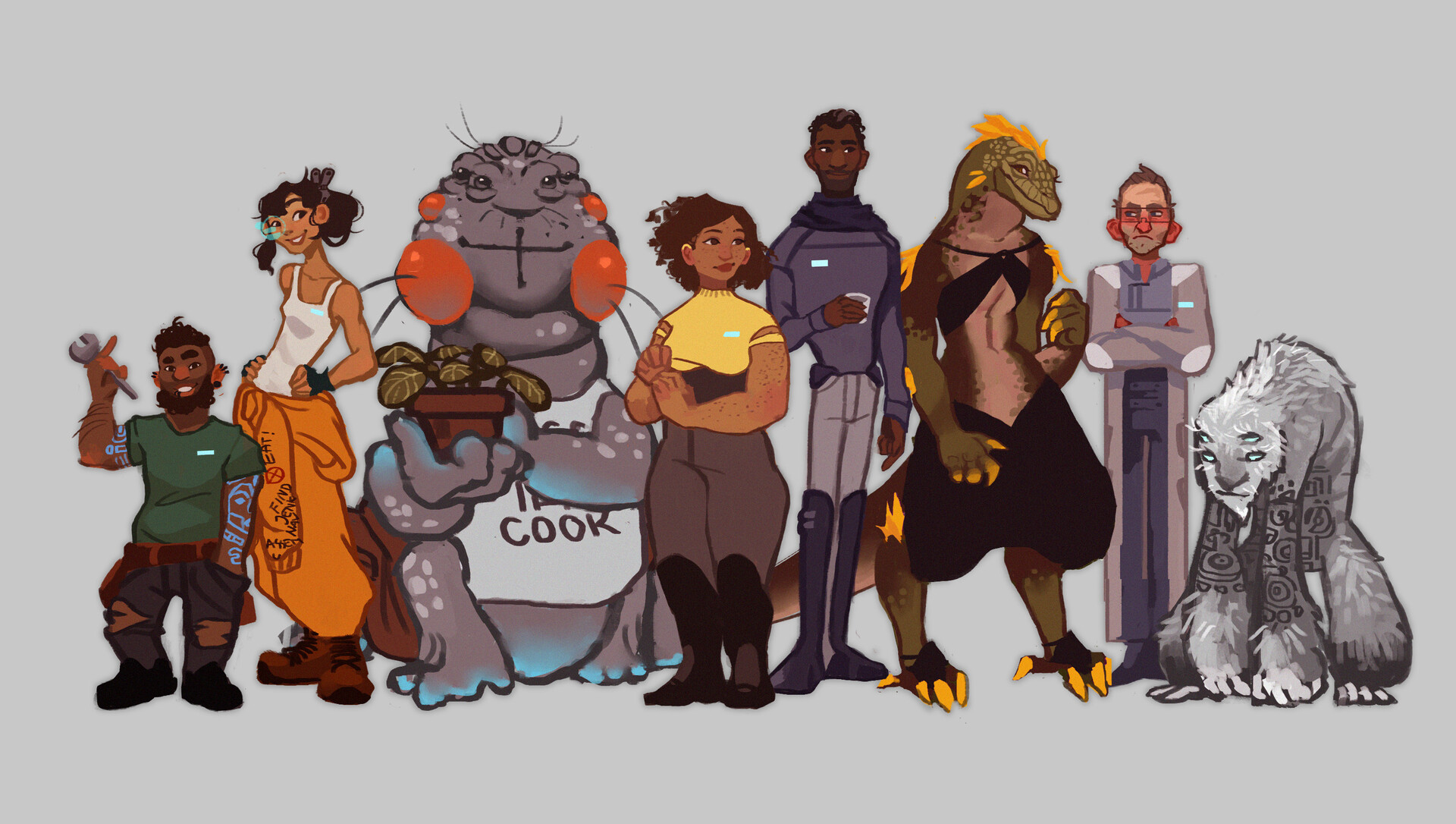
 Image result for a long way to a small angry planet characters


A Long Way to a Small Angry Planet by Becky Chambers

Before I get into my analysis of this book, let me just share my favorite quote, told by Sissix to Ashby: “Come on. Put on your trousers. I want to meet the woman who gets to take them off.”

This book is definitely geared more toward social issues than it is toward plot. However, that really works for the book, and I found myself enjoying all of the species diversity, character interactions, government commentary, and environmental issues.

This book definitely touches on multiple social issues we face in our current society. It speaks to racism and how other species are not only treated, but how they are spoken about. Like how initially Rosemary described Sissix not as beautiful in human standard, but as striking. She can’t judge that the Aandrisk appearances by human norms. That also is seen in how Sissix at the beginning sensors her affection with Rosemary despite Rosemary expecting overt affection from her studies of Aandrisks. They can’t always believe what word of mouth or books teach them about society and morality of others without personal experience. Not only that, but the book touches on language barriers and how different people adapt in order to be able to communicate or interact with other species, like how Ashby knows the basics of Pei’s color language and how she has a vocal implant to be able to speak aloud to him.

The book not only speaks to racial outcasts though, it also speaks to gender and sexuality, and even to mental health. For example, the ‘rashek’ Aandrisk that Sissix sees on the street is very similar to modern day perceptions of Autism. Without the prompt asking this though, I would have just categorized the action with any other form of social isolation to things people see as odd, like how westerners view eating bugs as gross whereas other cultures don’t. But with the prompt, I thought about it more in regards to even people of her own species treating her differently and the answer became clear. She isn’t physical contagious with a disease, she just is ‘awkward’ and doesn’t know how to properly interact with other people around her. Sissix gives her affection while other Aandrisks who are from there walk by and act as if they don’t see the older woman.

A Long Way to a Small Angry Planet made me think back to the social issues addressed in The Bear and the Nightingale as well. That book talked about cultures changing and evolving, like Christianity taking over primarily pagan spaces, or the social expectations of a young girl growing up in that time period and era. This book felt like it also focused on topics like that in regards to outside influences and perspectives views on other societies. Rosemary was a newcomer, someone who had never left her home planet of Mars, and yet she was very accepting in trying to be respectful and not judgmental of all these species lives and customs she wasn’t used to. She even was reasonable with the space pirates, who were a great representation of the lower economic class turning to crime in order to take care of their family.

There are too many social issues to get into in so little space. I haven’t even touched on how society views death, and the perspective of Ohan and the other crew on their dying. Needless to say, this book is much more about the characters and their interactions than about plot. I thought the book was slow until 1/3 of the way through when the crew got a new job for tunneling. But as I got farther into the book, my perspective changed too. I went into the book with expectations of tension and stakes in plot to keep me reading, like I do with most stories, but this book changed my mind. While it is a lot of world building and background information following several characters, it works. When I restructure my framework of what I expect out of a book and take a step back, I really enjoyed the book. It flowed well and I was interested in every single character's goals and motivations.

Verdict: a must-read.

Feb 1, 2020

Books I Read in 2020


The Bear and the Nightingale (Katherine Arden) 312 pgs
A Long Way to a Small Angry Planet (Becky Chambers) 438 pgs
Annihilation (Jeff VanderMeer) 208 pgs
The City of Brass (S. A. Chakraborty) 569 pgs
The Calculating Stars (Mary Robinette Kowal) 424 pgs
Spinning Silver (Naomi Novik) 480 pgs
The Haunting of Hill House (Shirley Jackson) 246 pgs
Hell House (Richard Matheson) 304 pgs
Ghost Story (Peter Straub) 567 pgs
Nightmare House (Douglas Clegg) 340 pg
The Amityville Horror (Jay Anson) 256 pg
Grave's End: A True Ghost Story (Elaine Mercado) 192 pg