My Blog List

Oct 17, 2019

Alien, My Chest Bursts For You (1979 Alien movie review)

Image result for alien  mouth


Alien (1979) is a very good, old movie. I’m sure this may offend some people that aren’t my age, but I’m used to the special effects of now. My all-time favorite movie is The Princess Bride (1987), which means I’m not concerned about the special effects when it comes to movies such as Alien.
Now, in general my review of Alien is praise.

This movie set up for a great expanding franchise. When you Google ‘Alien’, the very first thing isn’t general info on Wikipedia or a Urban Dictionary definition, it is this movie. Everyone knows the Xenomorphs, and by extension, the Predators. Terrifying races at odds, one killing to infect the universe with it’s species, one hunting just for the thrill of the sport. The movie set up the perfect universe for new creations such as the video game Alien Isolation, which spins off the movie plot, but is much scarier than the original film.

However, rewatching Alien with the assignment of having a critical eye, I did think there were a few flaws.

“Now this may seem a little bit harsh, but that’s because you are viewing it through nostalgia goggles… I’m going to take those off your face and replace them with the pragmatic transition lenses of reality.” (Brian David Gilbert)


The beginning is slow. I’m not the first person to say it. We get a dull introduction to the crew, and then the ship crashes and everyone is fine with exploring and waiting for it to be fixed. The plot takes off when the explorers come back with a face-hugger attached to Kane and Ripley doesn’t want to let them inside. That’s where everything starts getting good.

The face huggers are interesting creatures. They mystery on why they are keeping Kane alive, the acid blood, the sudden disappearance and finding it dead and Kane fine, all of these are amazing story elements. And then the alien bursts, and everyone says they told you so.

Honestly, the only characters I remembered the names of were Ripley and Ash. That’s because of Ash’s plot twist and inevitable bleeding of what looked like curdled milk, and because Ripley is a key example of a powerful female lead. If there’s one thing I like, it’s a badass lady. And Jonesy. Jonesy is the best cat.

Now, a lot of this movie is predictable. Letting the alien into the ship is obviously going to go sideways. Ripley ‘escaping’ only to find the alien on the escape pod is expected. But that doesn’t take away from the amazing creature, monster, that has been created in this movie. The alien is terrifying, stealthy, and an evolutionary perfect killer and breeder. There isn’t a question of intent to do harm or not. The alien doesn’t think or have morals, it just kills.

While this movie’s plot may have been slow for modern day standards, it is still a classic science fiction movie with horror elements. I watched this movie for the first time way back when alongside Nightmare on Elm Street a week before Halloween. I made my best friend hold my hand through the whole movie, because while Alien isn’t a jump scare horror, the suspense kills you.

This has been the best monster movie we’ve watched so far, and I have a feeling it’ll stay that way.


Oct 11, 2019

Medical Anthropology! ...oh and I guess zombies too (World War Z)


First of all, let me say props to this small Youtuber I found trying to do voice acting. This playlist made the voices of the different chapters even more memorable.

The book, while being about zombies, was more so a story on humans, our ability to cope (and hide) tragedy, quell panic, how societies interact and how the government involves itself. And despite the zombies, this also wasn’t a horror book to me. This was a commentary on mankind being the monsters more than it was a terrifying undead book.

Here, we see people spanning multiple locations around the world, and how the cultures handle the pandemic differently. The bigger issue than the zombies in this book were the surviving humans undermining one another. The whole books was brimming with political and personal agendas of unreliable narrators, and yet that’s what made it so good. The story pieced into interviews worked for me. It helped break up the story into palatable chunks, and worked much better than telling everything from the biased POV of one character only. Needless to say though, this books is about human reaction and interaction, not the undead. This book actually gave me Jurassic Park vibes, as weird as that is to say. It felt like the world was ignoring the threat or assuming they could keep it contained.

Now, I don’t remember a single character name, but I remember stories. It may be because I listened to the book rather than read it, but the character voices were so distinct. Thos voices are what got me through the book. I clearly remember the doctor with patient zero, the man smuggling in organs across borders, the greedy guy making money off false vaccination hope, the woman in the hospital with the mental state of a young child. All of them were different, and (almost) all of them were interesting.

However, I have to agree with Sean that the story being told in the past tense did ruin the tension. We knew all the people being interviewed survived. these drawbacks in tense drew me back from really enjoying this story. And the fact that the zombies weren’t as prevalent as I wanted them to be. This book was about humans, and I was let down by that, going in expecting more. The book did eventually become monotonous with tales of everyone dying and then the survivors finding a way to live high above and survive. It’s about human resilience, and readers always eat that up because they like seeing the person they emphasize with win in the end. But I say again, I can’t remember a single character name, so it’s hard to relate to characters. Not only that, but a lot of the character I felt like we weren’t supposed to like, and that’s why I enjoyed them. A good bad villain is hard to not love.

In the end, I have already recommended this to my sister, who at one point wanted to be an epidemiologist, but is now a medical anthropologist.

CLASS BOOK OVERVIEW UPDATED

**** for World War Z by Max Brooks

Thoughts?

Night of the Living Dad Disagrees (Night of the Living Dead 1968)


I watched the black and white version of Night of the Living Dead (1968) with my dad.

When I first hit play, I thought I hadn’t seen this movie before, but I quickly realized that I had seen it, it just wasn’t memorable. This statement my dad disagreed with. He, like Alexis, said the characters learned as they went, and so did the viewers, and that’s how he remembered it, as the movie went on her remembered right before things happened.

Some people have reviewed this movie by going through the plot, others through the characters, and others still avoiding both and analyzing it for it’s ground laying for the zombie genre. I actually wrote a play by play of comments as I watched this one. Here’s the CliffsNotes version of my funniest comments:

Image result for night of the living dead car

"They're coming to get you Barbara." I KNOW THIS LINE. HAVE I SEEN THIS?

These zombies are fast and smart. Not quick moving, but they chase Barbara across an entire field, and have fast reflexes in punching glass (and knowing to do that) and moving objects with strength. They use tools like rocks and clubs and shovels. I find it interesting to learn that the initial baseline for zombies had them much smarter than we do now. Speaking of shovels, Karen stabbing her mom was more like Chucky than what I think of as modern zombies. Side note: I also loved that the majority of them were in suits like the recently buried.

The music and string instruments are excellent. As a classical musician for 13 years, those crescendos are amazing and well timed. The black and white also lends itself very nicely to dramatic lighting. While the plot may be slow, the cinematography is excellent. The radio is so much more interesting than the actual plot. It pulls me to snippets sampled from the movie in the song Aim for the Head by Creature Feature. I also didn’t find this movie scary. Yes, the zombies are ominous and lingering, but this movie was more a setup to what would later turn the ghouls into the zombies we know and love today.

My mom walked in here and there while my dad and I were watching, and she complained about the overacting and everything being heavy-handed. She also enlightened me to the radios obsession with radiation, it being attributed to worry from the Cold War.

This movie has such a misogynistic view of women. Barbara is useless, Judy is dumb, Helen is annoying. I understand trying to put all the different forms of coping and trauma into the plot, but they could have done the Barbara being in shock much better. I just wanted her to die at the start. The women were useless. But this movies was made back in the '60s, so it should be judged by the views of that time, not our modern ones. They could have shown the different stages of grief much better. My dad liked all the females except Barbara.

As for character, I loved Ben. Everyone loves Ben. However, I didn’t like Cooper. He was very necessary for conflict to move the plot along, but I still cheered when Ben shot him. Cooper was just annoying, especially after he says he’s never opening the basement door again, and then he uncovers it and emerges just a few minutes after.

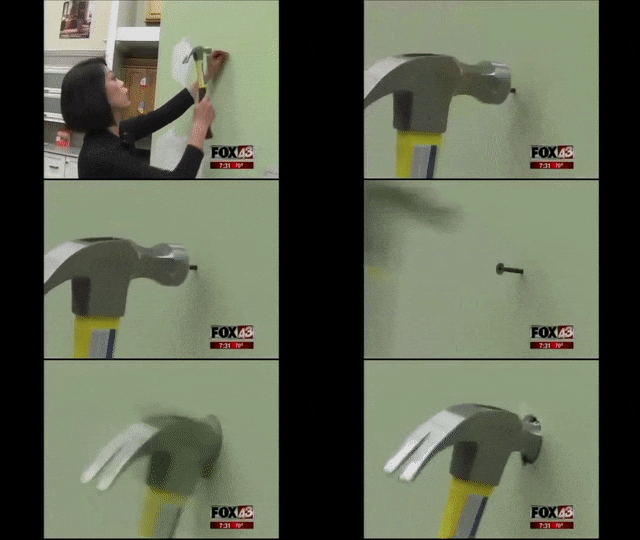
I’m going to contradict everyone else here and say Ben isn’t the only likable character though. I also liked Tom and Judy even though they were incompetent. Even though Tom and Judy were an idiotic train wreck, I feel like they are the most relatable characters to how I would act in the situation: trying to keep the peace and worried about one another taking risks. However, I would not be an idiot and run out to the car like Judy. And the foreshadowing with her saying did it have to be him made it obvious he would die. I honestly found it funny when Tom’s gas pump use was like those commercials where someone smashes a hole in the wall trying to hammer a nail in.

Image result for gif hammer wall hole

The ending didn't do it for me. I liked that everyone died, but I would have liked it more if the zombies had gotten Ben. At least then he could have gone down in a blaze of glory. His death was anticlimactic. I left feeling unsatisfied after finishing the movie. Why didn’t he just call out? Zombies don’t talk, it’s the easiest way to show you are human. That reminded me of Train to Busan, where (SPOILERS) the little girls sings and that’s how she know she’s human.

My overall: I understandable why this movie is the baseline for all of the stereotypes of zombies, and it sets that stage very well, but the plot itself is much too slow and the ending is uneventful.

Dad: Not scary, but very good and ominous. I think you're too hard on it. And Johnnies car was my car when I was younger, so I like Johnnie. And I'm John. It's perfect.

My final recommendation: Watch Night of the Living Dead for studying the origin of the zombie genre, but watch Train to Busan to be entertained and scared.
Image result for train to busan

Oct 4, 2019

Class Book Overview: Monsters (12/8/19)


Image result for cute cthulhu read

Do Read:

***** The Call of Cthulhu (H.P. Lovecraft)
**** Snow (Ronald Malfi)
***  The Funeral (Richard Matheson)
*** Breeding Ground (Sarah Pinborough)
*** The Outsider (H.P. Lovecraft) 
*** Relic (Douglas Preston & Lincoln Child)
**   Pickman's Model (H.P. Lovecraft)
**   World War Z (Max Brooks)
**  The Yattering and Jack (Clive Barker)


Don't Read:

**    Rawhead Rex (Clive Barker)
**    30 Days of Night (Steve Niles)
**    Cycle of the Werewolf (Stephen King)
*      I Am Legend (Richard Matheson)

Movie Reviews -->

A Not-Very-Graphic Graphic Novel (The Yattering and Jack)


Now don't get me wrong, I really enjoyed this graphic novel. Yes, I read the graphic novel version of this story, not the just text version. The Yattering and Jack by Clive Barker is one of the few stories from this class, along with The Funeral and Breeding Ground, that I would recommend to friends to read. I found it an interesting take on a story, I found the characters interesting and well depicted, and at no point did I want to set the story down before I finished it. It was so short and funny. The artist did a beautiful job with this story, making a little demon I could see as a plushie on my bed, and Barker did a great job making a humorous little story about a demon who can't do the one thing he’s supposed to. I loved the idea that Jack was oblivious to everything, and I loved the twist at the end that he was doing that on purpose to infuriate the Yattering. I especially loved the ending, because I felt it was just the Yattering basically becoming Jack's pet in place of all the cats that he killed.

That being said, despite being a very entertaining train wreck, I don't think the story did what the author intended. I don't think that came across. I feel like we as the reader are supposed to sympathize with the poor, depressed, suicidal, horny demon trapped forever in Jack’s house. I didn't actually get that though. I figure that that's what the author tried for, but the whole time I was rooting for Jack. I feel like this story is a worse version of Paradise Lost, trying to make you sympathize with the bad guy. But one of the things I loved best about this story was not sympathizing with the Yattering, but laughing at his frustration.

I think this story, much like Rawhead Rex that we read previously by Barker, benefits from the addition of visual aids, such as being a graphic novel or a movie. I got much more pleasure out of the stories reading them in the visual form then the purely text forms. Let’s be real here, nothing really happened in the story, so the visuals are what we rely on for content. The author follows the normal try and fail over and over trope, and they are not very interesting attempts. For a graphic novel, this story wasn’t very graphic with the Yattering’s attempts to drive Jack insane. You would have thought they would have put their top notch demon on the job, but this demon falls flat because the toothpaste all over the bathroom didn’t work, boo hoo. This story should have skipped right to killing cats and began there, because even for a humor with horror story, nothing about this demon was horrifying.

Read the graphic novel, not just the text. You'll thank me later.

Sep 27, 2019

The Cycle of Inconsistency (Cycle of the Werewolf Review)


The Cycle of the Werewolf is actually the first ever writing I have read by Stephen King. As far as an introduction to the author goes, Stephen King to me is alright. I wouldn’t put him up there with J.K. Rowling for popular authors, because I don’t think he deserves all the hype and fame he has. However, his writing is at least clean and entertaining when the plot isn’t dragging.

Now, I have some experience with King, just not in text form. I know the movie The Shining, and I know the play Carrie. Both of these I found interesting. The Cycle of the Werewolf, being the first novel I’ve read of his, did not hold up to those standards. It wasn’t terrible, but I had high expectations going in, and those expectations were not met. I was let down.

The book fell into two categories for me:
Good chapters- Jan, Mar, Apr, June, Aug, Oct, Nov, Dec
Bad chapters- Feb, May, July, Sept

We just discussed a chapter in Writer’s Workshop of Horrors (WWoH) on tone and writing style. I can’t say one way or another if this is normal for King’s tone, but I feel like the fact that the chapters jump between good and bad makes me feel like the writing style is very inconsistent. In some chapters there are beautiful phrases, rhetorical elements, and interesting plot twists. In others, the scenes drag on, the word choices are cliché, and the prose is too repetitive. The chapters are all over the place.

Now, some of the clichés work for me, such as the end of the very first chapter of the book. “—it is all black winter and dark ice. The cycle of the Werewolf has begun,” may be a bit cheesy, but it’s also a nice way to incorporate the title of the book into the story. However, other examples don’t work for me at all, such as, “Love, Stella Randolph thinks, lying in her narrow virgin's bed…” or the repetitive, “’You always get what you want! Just because you're a cripple!’"

The story really picks up after the first survival of a victim (during July). Even though I thought the chapter July drug on too long before getting to evening, it did a good job of setting up the story for the later recurrence of those characters. I understand the importance of having the previous murders by the werewolf mentioned for build-up, but this book should have started in June. That’s the chapter when a victim first sees the person change under the moonlight, and then the chapter after that is when we get the ‘main’ character of Marty introduced and survives. All the earlier chapters are either irrelevant information to build up to a murder, or boring dialog of townsfolk talking about the werewolf. IT IS BORING.

That would be my summary of the book too. Even the end of the book, where I enjoyed the chapters, still drug on too long. I felt like there was too much unnecessary exposition and descriptions. I didn’t, but I wanted to skim.

Verdict: Skip the first 30% of the book. Or else, the pacing is better for a movie script instead.


Sep 20, 2019

Raw-Head Sex, Urine, Menstrual Blood, and Other Forgettable Fluids (Rawhead Rex)


After reading ‘Rawhead Rex’ by Clive Barker, I’d be interested to read more of the stories from the Books of Blood volumes. However, not because of Rawhead Rex because I didn’t particularly care for this story itself. The author’s writing style is what got me interested in other writing by him.

I found Rawhead Rex convoluted and disgusting. It was convoluted because of the many plot and setting inconsistencies. One plot inconsistency I found was why Rawhead didn’t fear the mom at the beginning on her period, if bleeding women was what he was scared of. He should have been afraid of her, and if he was, how was he able to overcome that and take the child from her arms anyway? How come bleeding women didn’t scare him, but a statue of a bleeding woman did?

The setting I also found confusing. I had to look up a whole slew of words while reading this short story: cleg, vestments, dyspeptic, aplomb, portico, eiderdown, peccadilloes, and copses. Now, some of these I can chalk up to not knowing religious terminology, and a few of them I was able to gauge through context, but I found this pulled me out of the story several times and forced me to reread sentences to glean that context. Now, this wouldn’t be a problem if the story had been set in the time when Rawhead was originally buried, back in older times. But this story was set in an age full of cars and modern police-issued guns. I didn’t feel like the vocabulary used in this story matched the time of the story, even if it semi-matched the setting of a small village. It didn’t work for me.

The point-of-view switches also didn’t work for me. I wish the author had either told the story from Rawhead’s perspective, or had switched POV between the victims of the monster. Instead, he does both of those, along with giving us POV from people who don’t even die from the monster. The uses of the characters names helped with this, but as you can tell from my above comment mentioning Gwen by description rather than name (I had to just scour the pages to find who the bleeding mother was), none of the characters other than Rawhead were memorable.

This is not a bad idea though. I think this would make an excellent movie if it isn’t already one. A child eater buried alive underground, but then reemerging after being forgotten by the descendants of the people that buried him and then ravaging the town. That’s a good movie. But the weird description and obsession with urine didn’t work in the story, and would be much better whether in text or on screen as blood. The ending of the book didn’t feel very satisfying for me with it ending talking about piss again. I wish it had ended with his skull being smashed in and brains going all over.


Yes, I understand this story was a lot about bodily fluids. It talks about urine, feces, menstrual blood, and much more. It even goes into great detail about the erections of men and their manhood being torn off. I’m sure it’s a social commentary on something. But the urine didn’t do it for me as a reader, and the description of Rawhead’s race having sex with the women didn’t make sense to me until he outrightly said it with the women not surviving childbirth of half-breeds. Somehow, in a story where the women are the monsters weakness, women don’t feel like heroes. They just feel objectified and useless.

I’m glad we are reading another story from Books of Blood, because I’m interested to see what else Barker has to offer, but I wouldn’t offer this story as a recommendation to my friends.

Sep 12, 2019

You Need To Own This Book—NOW! (Breeding Ground)


I think in this day and age where dystopian novels and apocalyptic video games are thriving, this would be an excellent book to hook my friends with.

I get most of my school books free through my local library, but “Breeding Ground” by Sarah Pinborough was so good that immediately after finishing the audiobook, I went out and bought myself a copy for my bookshelves. That fact is astounding, mainly because of my extreme arachnophobia, but I found myself adoring this apocalyptic tale of mutant spiders.

For a horror book, this book wasn’t all that horrendous. I mean this in the literal sense. There wasn’t much brutal killing. The build up of and revealing of the widows in the story was what made the book horror. Intensity, psychologically thrilling, but not scary. That is one of the reasons I was actually interested in a book about spiders. Yes, the creatures were described in great detail, their webbed murders and modes of being birthed gruesomely told in gorey detailed for readers. However, the actual deaths were left to the imagination. People were almost always killed ‘off screen’. Tension was key.

The real monster, and meat of this story, was the human’s interactions with one another. The lengths to which the survivors would go to keep themselves, and those they cared about, safe made this book more a story of an survival than that of running from monsters. The conflict moved away from being the widows outside the fence and more about the internal conflict happening to the women, between the men, and the unknown of what was happening to characters injured like Dave.

The one thing in the book that didn’t sit super well with me was the main character, Matt. He was not a super relatable character, and, as with I Am Legend, the male lead seems to be lust-filled despite lost lovers and the end of the world. Matt is willing to have sex with eventually both of the only two women left alive, and his is even after the death of his never-forgettable girlfriend Chloe and their unborn child (who was beautifully described half gnawed on in the womb by the way). I felt that his story telling was more of a camera lens he was showing us, which can work sometimes with novels written to be retellings. However, Matt didn’t do that for me, and I felt the character wasn’t relatable enough to warrant me following the scenes on his shoulder like a parrot.

I love that multiple classmates of mine have thought differently about the ending. Many think that the widows won in the end and killed all the humans. I initially thought that the humans would win after the chapter ended because of the discovery of the widows weaknesses and the people that were immune. The cliffhanger ending was very interesting to me, but also a bit cliché, seeming like it was purposely set up for a sequel instead of just to keep the reader guessing. However, if there is a book two or a movie adaptation, sign me up for the creepy crawlies.

My physical copy is shipping, and it is going to be borrowed out immediately to my sister. Nothing better for a sci-fi enthusiast than mutant spiders. This one’s going on the reread shelf.

Sep 6, 2019

The Funeral by Matheson: Is is Worth Your Time?


As far as short stories go, The Funeral by Richard Matheson is a quick 5 page read. It is very funny, and a quirky new take on funerals for the undead. However, I feel like the idea behind the story was much better in theory than when executed on the page.

From the very beginning, I found it hard for me to get drawn into the tale because of the language choices slowing my reading down. The word choice seemed a little superfluous. This could key in to the main character’s personality or social class, but for me it was a bit distracting. Within just the first two paragraphs, Matheson used the words “obsequies”, “placid clasp”, “sable leather”, and “curt acknowledgment”. One sentence that stood out to me and made me reread it was this bit of dialog: “Ah, good evening, sir,” he dulceted, his smile a precise compendium of sympathy and welcome, his voice a calculated drip of obeisance. I was always taught that unless it is necessary, always use ‘(s)he said’ so as not to distract the reader. I, for one, was very distracted by the language.

However, I still found this story a cute and silly read. I loved the twist of the funeral being for vampire Ludwig Asper himself. I also adore the hilarious entourage of supernatural beings that attended the funeral. The paragraph describing the monsters was the best part of the whole story.
This short story ties perfectly to the craft book my class is reading called Writers Workshop of Horror. We just read the chapter ‘Adding Humor to your Horror’ and this story is a perfect example of a tale that I feel isn’t actually horror, despite it’s inclusion of a lot of monsters. The humor leads more than the horror, and even though Silkline was scared of the monsters, I wasn’t. I feel this text falls more into the realm of fantasy rather than horror.

Silkline didn't feel like the protagonist of this story to me. He wasn't sympathetic in the beginning, being more a greedy salesman than someone for you to cry on and tell about your dead family. Then, during the funeral itself, he felt too passive, only reacting to the things he saw or what was said to him. He felt more like a camera to look through and less a character to relate to.

The beginning and end of this text I enjoyed. However, I felt the actual funeral part of the story was a little muddled. It became a mess of people talking over one another, between the witch, the waxen-faced man, the man giving the speech, and Ludwig himself. I know this was meant to be written this way, to emphasize the chaos that was happening during the funeral and make it feel jumbled, but it read confusing to me instead. I read ahead in Writers Workshop of Horror to the chapter ‘Middles: the Meat of the Matter’, and because of the funeral scene being a mess, I feel this story wasn’t able to fulfill the role of the middle of a story setting up the climax and satisfying the reader like a main course. It did set up the end scene of another monster coming in for a funeral well, but it didn’t leave me feeling closure for Asper’s funeral.

Overall, my take on The Funeral is it is a quirky read that I would recommend to people. Despite it’s flaws, it is a short enough read to be worth spending a few minutes getting through, and it is a good example of how to show up and coming writers how to incorporate humor into their writing.